How to tell your water heater is on the way out
Most water heaters don't fail without warning. Here's what to watch for.
September 8, 2026 · 4 min read
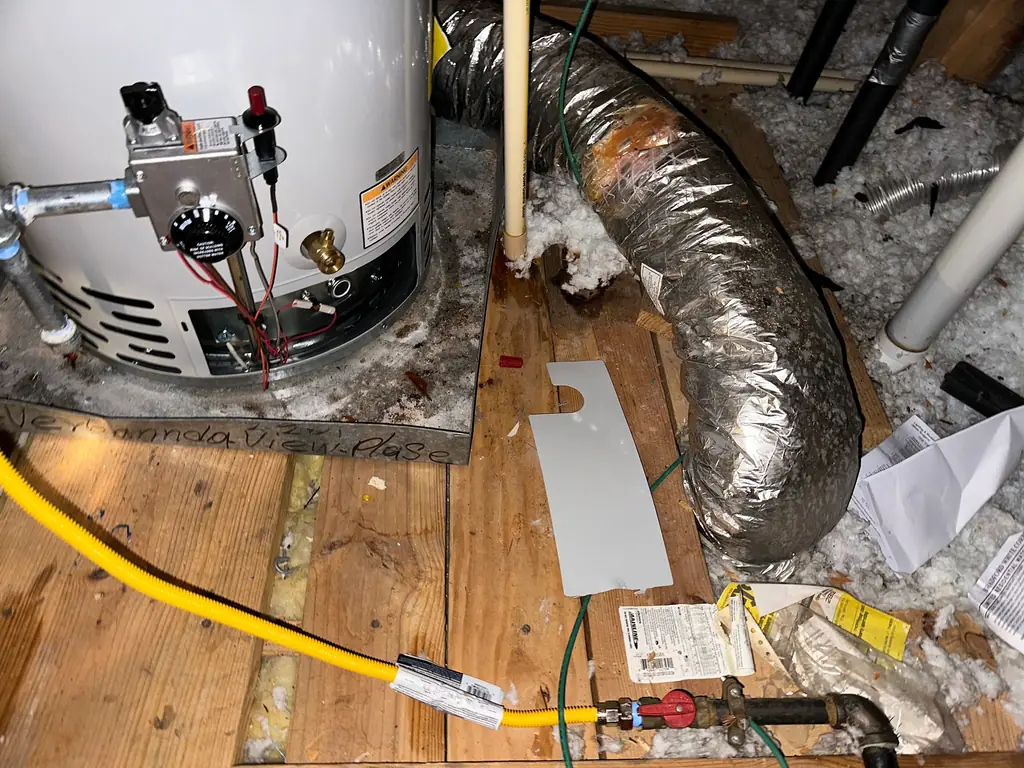
Water heaters don't usually die all at once. They send signals for weeks, sometimes months, before they actually quit on you. Catching those signals early is the difference between a planned replacement on your own schedule and a cold shower on a Tuesday morning followed by a flooded closet.
Six signs worth paying attention to
Here's what we look for when we're called out to check a tank that's acting up.
- Inconsistent water temperature, going from hot to lukewarm to cold in the same shower
- Rusty or discolored water coming out of the hot tap specifically, not the cold
- Popping, rumbling, or cracking noises from the tank as it heats
- Water pooling around the base of the unit, even a small damp patch
- Reduced hot water supply, where a tank that used to last through two showers now runs out after one
- Energy bills creeping up with no other explanation
Any one of these on its own could be a minor fix. Two or three together, especially rust in the water and noise from the tank, usually means the unit is failing from the inside and time is limited.
A tank that's still under warranty is worth a repair call regardless of these signs, since the cost of parts is often covered. Once the warranty has run out, and especially once the unit is past ten years old, the calculation shifts, and it's worth weighing what you'd spend on parts and labor for a repair against a full replacement that resets the clock and usually comes with its own new warranty.
The ten-year mark
Most standard tank water heaters are built to last somewhere around ten to twelve years, depending on your water and how hard the unit has worked. If yours is past ten years old, age alone is a reason to start planning for a replacement even if it seems to be running fine today. A tank that fails without warning at year twelve tends to fail badly, with a full tank of water finding its way onto your floor rather than a slow drip you catch in time.
If you don't know how old your unit is, check the serial number on the manufacturer's label. Most brands encode the manufacture date in the first few characters, and a quick call to us or a look at the manufacturer's website will tell you what you're working with.
Repair or replace
This is the question we get asked more than any other, and the honest answer depends on three things: the age of the unit, what's actually wrong with it, and what it would cost to fix versus replace.
A newer tank with a single, contained problem, like a failed heating element or a bad thermostat, is usually worth repairing. An older tank with rust in the water or a leak at the tank itself is a different story. Rust means the tank's inner lining has broken down, and a leak from the tank body, not a fitting or valve, means the tank has already failed structurally. Neither of those is something you patch. At that point you're looking at replacement.
We'll always tell you honestly which category yours falls into rather than pushing a repair that's only going to buy you a few months.
A rough guide we use: under about six years old, repair is almost always worth it. Between six and ten, it comes down to what's actually broken and how it compares to the cost of a fresh install. Past ten years, unless the fix is genuinely minor, replacement tends to be the more sensible spend, since you'd otherwise be putting real money into a unit that's already near the end of its expected working life.
What a replacement day actually involves
A standard tank swap is usually a same-day job. We disconnect and drain the old unit, remove it, set the new tank in place, reconnect the water lines, gas or electric supply, and venting, then test for leaks and proper operation before we leave. If your old unit was undersized or oversized for your household, that's also a good moment to talk about the right capacity going forward, and whether a tankless system might suit you better.
One thing that helps either way, on an aging tank and on a brand new one alike, is periodic maintenance. Having the tank flushed clears out sediment that settles at the bottom over time, and sediment buildup is a big part of why tanks make noise, work harder than they need to, and wear out faster than they should. It's a small job that adds real years to a tank's working life.
If you're seeing any of the signs above, or you know your tank is past its tenth birthday, it's worth getting it looked at before it decides for you. We're a locally and family owned plumbing company serving Spring, TX and the greater Houston area, with over 25 years of experience installing and replacing water heaters, including tankless systems. Free estimates, upfront pricing, and 24/7 emergency service if yours has already let you down. Call us at (832) 220-5104.
Plumb Pro Services, (832) 220-5104
Call (832) 220-5104More articles
What actually clogs a drain, and what to stop putting down it
Most clogs aren't a mystery once you know what actually causes them.
Tankless water heaters: what changes in the house
A tankless system changes the utility closet, the gas line and the way hot water arrives. Here's what's actually different.